Best Automatic Cat Feeder with Stainless Steel Bowl for Wet Food: A Practical Guide for 2026
Disclosure: This post may contain affiliate links. We may earn a commission on qualifying purchases at no extra cost to you.
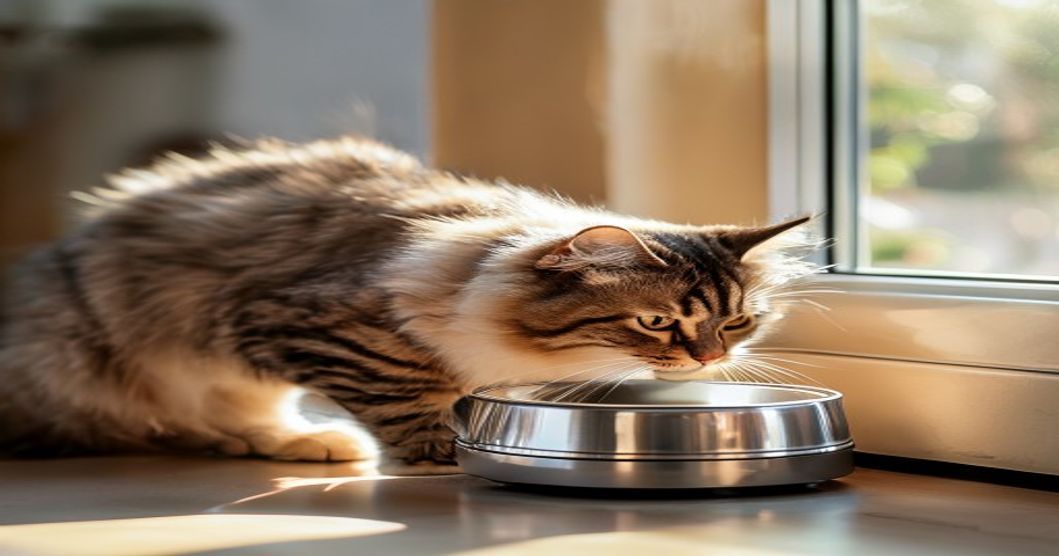
My cat Milo used to knock over his wet food bowl at 5 a.m. every single morning, meowing like I’d committed a crime by not refilling it the instant he woke up. I’d stumble to the kitchen, step in a cold puddle of chicken pâté, and repeat this dance every day for three years. Then I started researching automatic feeders—not the dry-food hoppers everyone talks about, but actual wet-food dispensers with stainless steel bowls. What I discovered changed our mornings and, honestly, helped me understand what actually works and what’s just marketing noise.
Why Automatic Wet-Food Feeders Are Not What You Think They Are
When you search for “automatic cat feeder,” you’ll drown in photos of stainless steel hoppers with dry kibble tumbling out. Wet-food feeders are different animals—literally and mechanically. Your cat’s canned food, raw meat, or fresh fish doesn’t flow like pellets. It’s heavy, it sticks, and it dries hard. That’s why a feeder designed for dry food will either refuse to dispense your cat’s wet meal or jam up inside its mechanism within weeks.
Here’s the real divide: most automatic feeders on the market are built around a rotating disk or gravity hopper. Great for kibble. Useless for wet food. The feeder you actually need uses one of two approaches. Either a motorized scoop that fills a bowl from a small reservoir (think a wet-food cartridge system), or a simple timed bowl that lifts a cover at set times to reveal a pre-portioned meal inside. Both have trade-offs.
A scoop-based system (the more complex one) lets you serve fresh food multiple times a day, which is closer to what your cat would eat in nature. But the motor driving the scoop is the weak point. If wet food hardens inside the mechanism—and it will, because pet-food manufacturers don’t optimize for mechanical feeders—the motor burns out. I learned this from owner forums before I spent a dime. Dozens of people reported the same failure: bought in January, dead by April.
A timed-cover system is simpler. A sealed container holds two or three portions of wet food, each in its own compartment. At feeding time, the lid rises or rotates, exposing one portion. Your cat eats, you manually refresh the food daily. It sounds primitive, but it solves the jam-up problem entirely because there’s no motor grinding through hardened food.
The Stainless Steel Bowl: Why It’s Not Optional
Stainless steel is the only material that makes sense for wet food, and I’ll explain exactly why because too many ads gloss over this.
Plastic absorbs odors and bacteria. Wet food leaves microscopic particles and oils in plastic’s porous surface. Even after washing, the bowl smells faintly of old chicken. Cats notice. Some will refuse the food because the odor is off. Worse, bacteria hiding in those microscopic divots can cause chin acne or skin irritation, especially in cats with sensitive skin or those prone to dermatitis.
Ceramic chips and collects bacteria in the cracks. A cat’s tooth or a fork can nick ceramic. Once it chips, bacteria colonize the rough edges. You can’t bleach a chipped bowl safe enough to erase the risk. Some manufacturers claim “food-grade ceramic,” but even food-grade cracks.
Stainless steel is non-porous, non-toxic, and dishwasher-safe. Steel doesn’t absorb anything. You wash it, it’s clean. No lingering smells, no bacterial hiding spots. Stainless steel is also durable enough that a cat’s claws or the feeder’s mechanism won’t easily damage it. And if your feeder’s bowl is removable—which it should be—you can drop it in the dishwasher or soak it separately without worrying about the electronics.
One hidden benefit: a stainless steel bowl in a feeder with good spacing around the edges doesn’t collect spilled food. Plastic rims tend to have small gaps where wet food settles and ferments. Stainless steel, especially if the feeder is designed well, keeps the area clean.
The Real Owner Complaints (and How to Avoid Them)
I spent hours reading actual reviews from people who’ve owned these feeders for 6+ months. Three problems came up over and over.
Mechanical failure or jamming. This is the big one. A motorized feeder works great for weeks, then one morning the food doesn’t dispense. Owner opens it up and finds wet food has dried and crusted inside the dispensing mechanism—often in a spot that’s hard to reach. The motor is now grinding against hardened food and won’t move. Some owners could disassemble and soak every part; many couldn’t and tossed the feeder. The fix: buy a feeder with a fully removable dispensing assembly. If you can take apart the entire feed mechanism and soak the pieces in warm water, you can prevent this. Avoid models where the scoop or disk is permanently glued or bolted to the motor housing.
Food spoilage and odor. A feeder sitting out in a warm kitchen will spoil wet food if the room temperature is above 75°F for more than an hour or two. Some owners filled the feeder in the morning, thinking their cat would eat throughout the day—only to find the food had started to stink by noon. If your kitchen gets warm or your cat eats multiple meals from the feeder, you need refrigeration or a feeder designed to keep food sealed until the exact moment of serving. A timed-cover system (the simple kind) handles this better because the food stays sealed and cool until the lid opens.
Cat refusal or behavioral issues. Even if the feeder works perfectly, some cats just don’t like it. They’re suspicious of the sound, the mechanical movement, or the new bowl location. One owner reported her senior cat ate normally from a dish but refused the same food from the feeder’s bowl—not because of the stainless steel, but because the feeder made a beeping sound at feeding time that startled her. The fix: introduce the feeder gradually. Place it in the spot where you normally hand-feed your cat. Let her eat from the stainless steel bowl for a week *before* you automate anything. Then program it to dispense while you’re nearby. Most cats adapt in 3–7 days, but some older cats need longer.
Two Strategies: Motor-Driven or Timed-Cover
Let me walk you through the two main designs so you can decide which fits your cat and your lifestyle.
Motor-driven scoop feeders use an electric motor to portion out food from a reservoir and drop it into a stainless steel bowl. They’re flexible—you can program different portion sizes and multiple meal times. They feel high-tech. And they’re the biggest gamble because the motor has to survive exposure to wet food, and most don’t last beyond 4 months of daily use without maintenance.
If you choose this type, your only real protection is religious cleaning. Every 2–3 days, you must disassemble the entire feeding mechanism, soak the scoop and chute in warm water, and dry everything thoroughly before reassembling. Some owners do this happily. Others find it tedious. If you’re in the latter camp, don’t buy this type—you’ll end up with a non-functional feeder and buyer’s remorse.
Buy this type if: you want flexibility in portion sizes, your cat eats at weird hours, or you’re meticulous about maintenance. Also, if your cat has diabetes and you need precise portions at specific times, these feeders (often paired with a portion-control step, as detailed in our diabetic cat feeding guide) can be a real help.
Timed-cover feeders have sealed compartments, each holding one meal’s worth of wet food. A motorized lid or carousel rotates or opens at set times, revealing the next compartment. The food stays sealed and cool until the exact moment of serving. There’s no scoop, no chute, minimal moving parts. That means almost zero risk of jamming.
The trade-off is less flexibility. Most models have 2–4 compartments, so you can serve at most 4 meals per day (though some have more). And you fill the entire feeder at once, so you’re prepping food in advance—which is actually a pro if your cat eats at consistent times, but a con if she’s unpredictable.
Buy this type if: you want maximum reliability, your cat eats at regular times, or you’re not interested in fiddling with motors. The stainless steel bowl in these models is usually built-in or easily removable, making cleaning straightforward.
Stainless Steel Bowl: Bowl Quality Matters
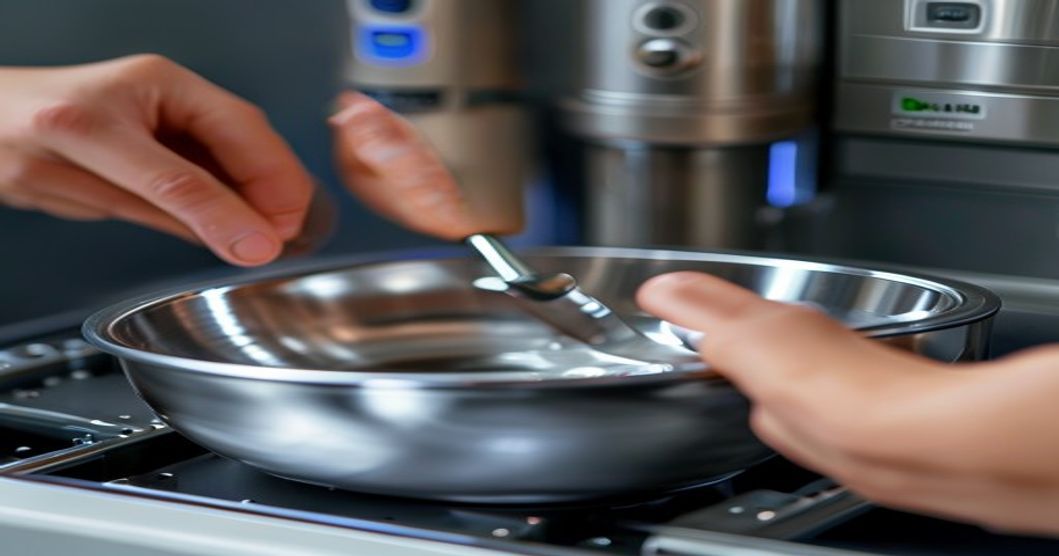
Not all stainless steel is equal. Cheaper feeders use thin, lightweight stainless steel—the kind that bends slightly if your cat paws at it or if you accidentally drop it. That’s annoying but not a deal-breaker. Better models use heavier-gauge steel that won’t dent or warp. The bowl’s rim also matters: a rolled or welded edge (smooth) is better than a stamped edge (which can have burrs that catch food or irritate a cat’s mouth).
Check reviews for any mention of the bowl being “thin” or “flimsy.” That’s a sign the manufacturer cut corners. A quality stainless steel bowl should feel substantial—like a real dish, not a toy.
Also confirm the bowl is removable. Even if it’s stainless steel, you want to be able to hand-wash or soak it separately from the feeder’s electronics. Some budget models have the bowl bolted on, which makes cleaning awkward. Removable is always better.
Fitting It Into Your Cat’s Real Life
Here’s the honest part: even the best automatic feeder with a pristine stainless steel bowl is useless if your cat doesn’t use it or if it doesn’t fit your household’s rhythms.
If your cat eats at wildly different times—some days she’s ravenous at 6 a.m., other days not until 10 a.m.—a feeder designed around fixed meal times will frustrate you both. An on-demand bowl (which is manually refilled but not automated) might actually be a better choice than fighting with programming.
If your kitchen gets hot, refrigeration matters. Some feeders have insulated compartments or ice-pack slots that keep food cool for up to 8 hours. Others rely entirely on room temperature. If your house is warm, you need the cooling feature, or you need a timed-cover feeder that you refill fresh multiple times a day.
If you have multiple cats and one is a bully, a feeder might trigger territorial aggression. An automatic feeder that dispenses food at scheduled times is actually safer for cats that eat separately because each cat can eat alone without competition—but only if you place multiple feeders in different areas. One feeder for two cats usually creates problems.
Location matters, too. Wet food spills or splashes. Place the feeder on a wipeable mat or tile floor, not on a rug or hardwood where accidents are a nightmare to clean. Also, keep the feeder away from your cat’s water fountain—cats can track food crumbs into water and it’s gross for everyone. Speaking of water fountains, a filtered cat water fountain is a great companion to an automatic feeder because it encourages hydration, especially important if your cat eats mostly wet food but might still benefit from fresh water flow.
The Decision Framework
Ask yourself these questions in order:
1. Does my cat eat at consistent times? If yes, a timed-cover feeder is simpler and more reliable. If no, a motorized scoop feeder gives you more flexibility—but only if you’re willing to maintain it.
2. How much are temperature and spoilage a concern? Hot kitchen? Go timed-cover or motorized scoop with cooling. Mild climate? Either works.
3. Am I willing to disassemble and soak a motor feeder every few days? Honestly answer. If “no,” pick timed-cover.
4. Does my cat have special feeding needs? Diabetic cats benefit from precise portions and multiple daily meals (motorized scoop with portion control). Senior cats or picky eaters often do better with timed-cover because the food quality and freshness are higher since you’re prepping real portions, not relying on a motor to dispense stale food.
5. What’s my budget? Quality motorized scoop feeders run higher. Timed-cover feeders are often less expensive because the mechanism is simpler. Stainless steel bowls are a non-negotiable cost everywhere—plastic is cheaper but wrong.
Maintenance to Keep It Working
Whether you choose motorized or timed-cover, here’s what actually keeps a feeder alive:
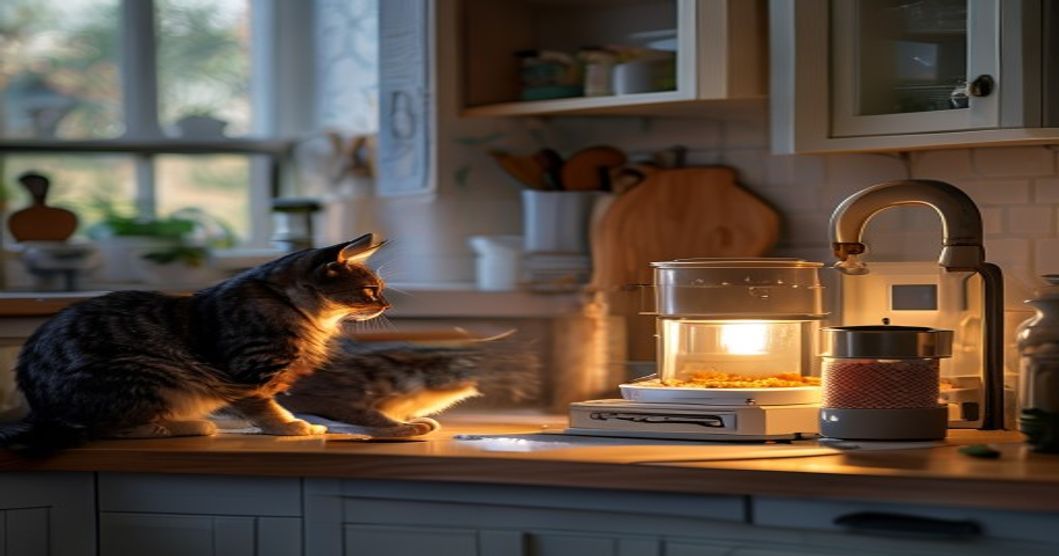
Daily: Wipe out the stainless steel bowl. If it’s removable, rinse it under hot water and let it air-dry completely before reinserting. Wet residue left to sit attracts bacteria and odor.
Every 2–3 days: If you have a motorized feeder, disassemble the dispenser, soak the scoop or feed mechanism in warm water for 15 minutes, scrub away any hardened food, and rinse thoroughly. Dry completely before reassembling. This one step prevents 90% of jams.
Weekly: Wipe down the feeder’s exterior and any seams. Check that the bowl’s rim is clean and free of food fragments. If you have a timed-cover feeder, rotate the compartments to ensure they’re all clean and the lid moves freely.
Monthly: Deep-clean the entire unit. For motorized feeders, take out the motor housing (if removable), wipe it with a dry cloth, and inspect for any food crust or damage. For timed-cover feeders, remove the bowl and wash the entire interior.
Honestly, if you hate cleaning, don’t buy a motorized wet-food feeder. The maintenance is real, and skipping it means failure.
Pairing With Other Feeding Habits
An automatic feeder isn’t meant to replace you entirely—it’s meant to solve a specific problem: your cat bugging you at dawn, or ensuring meals happen on schedule when you’re at work. But wet food from a feeder works best alongside good habits.
Hand-feed your cat once or twice daily if you can. This keeps her bonded to you around feeding time and lets you monitor for appetite changes, which are early signs of illness. Use the feeder for one meal (usually the early-morning one that wakes you up) and hand-feed for lunch or dinner.
If your cat is older, diabetic, or has kidney disease, check with your vet before automating. Some conditions require feeding at very specific intervals, and a feeder has to be reliable enough to handle that precision. Our guide to portion control for diabetic cats has more detail on this.
Wet food is metabolically closer to what cats eat in the wild (high protein, high moisture), so it’s usually better for them than dry kibble alone. But an automatic wet-food feeder doesn’t change the food quality—it just automates delivery. If you’re currently feeding your cat low-grade commercial wet food, the feeder won’t improve that. Start with better food, then automate.
What Actually Works: The Real-World Test
Milo’s situation improved almost immediately once I understood what I was actually buying. I chose a timed-cover feeder with three compartments (so three meals per day), a heavy-gauge stainless steel bowl, and simple mechanics with no motor. On day one, I placed it in the spot where I normally feed him and let him eat from it unplugged. By day three, I automated it.
The feeder dispenses at 6 a.m., noon, and 6 p.m. I prep fresh food each morning (about five minutes of work) and fill all three compartments. Milo eats at his preferred times, the bowl is easy to clean, and there are no mechanical failures to stress about. Would a motorized feeder give me more flexibility? Sure. But I’d also be disassembling and soaking parts every few days, which honestly sounds exhausting. Timed-cover isn’t fancy, but it works.
The biggest shift: I sleep past 5 a.m. now. That alone makes the feeder worth it.
An automatic wet-food feeder with a stainless steel bowl solves real problems—early-morning wake-up calls, scheduling meals around work, portion control. But only if you pick the right type for your cat’s personality and your willingness to maintain it. Stainless steel is non-negotiable for wet food (durable, bacteria-resistant, easy to clean). Motorized feeders are flexible but mechanically fragile; commit to disassembly and soak every few days or they’ll jam within months. Timed-cover feeders are simpler, more reliable, and actually work better for cats with regular eating schedules. Start by asking whether your cat eats at consistent times—that single answer narrows your choice significantly. Then prioritize a fully removable, soakable bowl and a mechanism with the fewest moving parts. Do this, and you’ll have a feeder that lasts and a cat that eats on schedule.
Frequently Asked Questions
See the FAQ section above for detailed answers to common questions about automatic wet-food feeders, stainless steel care, cleaning schedules, and troubleshooting.
Disclosure: This article contains affiliate links to Amazon. As an Amazon Associate I earn from qualifying purchases. I may receive a commission if you buy products recommended here, at no extra cost to you. I recommend only based on honest research into what actually works for cats, not on commission value.