Best Automatic Cat Feeders with Infrared Pet Detection to Stop Raccoons in 2026
Disclosure: This post may contain affiliate links. We may earn a commission on qualifying purchases at no extra cost to you.
You step onto your back porch at dawn, coffee in hand, only to find your cat’s kibble scattered everywhere and the feeder tipped over. Again. A fat raccoon trots away into the bushes, completely unbothered by your frustrated yelling. If this sounds familiar, you’re not alone—outdoor cat owners everywhere battle the same furry bandits who treat pet feeders like an all-night diner.
Infrared pet detection feeders combine heat-sensing technology with sturdy construction to let only your cat eat while locking out raccoons and other pests. They work indoors and out, though outdoor models need weatherproof ratings and regular sensor maintenance. Not every cat owner needs one—indoor-only feeders and proper storage solve the problem for many—but if you’re feeding cats outdoors or dealing with persistent raccoon raids, infrared detection is one of the few methods that actually works without relying on microchips alone.
Best Overall
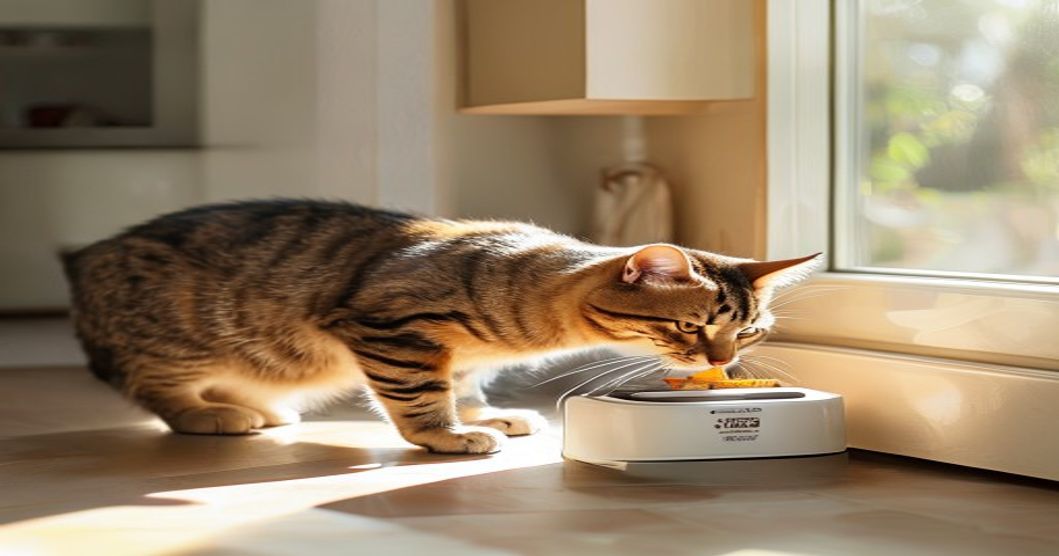
For outdoor and indoor cats dealing with raccoon pressure. The feeder detects your cat’s body heat and unlocks; anything cooler or larger-bodied typically can’t trigger it. Works best when positioned away from climbing routes and paired with motion lights.
Premium Choice
Combines microchip ID with infrared detection for maximum precision. Each cat wears a collar tag; the feeder scans the chip and confirms body heat before opening. More expensive but eliminates false triggers from other animals or interference.
Best Value
Heavy-duty construction with sealed motors and stainless steel bowls. Not all come with infrared, but those that do offer durability for harsh outdoor weather. Pricier upfront but last years longer than plastic alternatives.
Why Raccoons Win Against Regular Feeders
A standard timed feeder opens on a schedule. A raccoon learns the schedule. A motion-activated feeder detects movement—raccoons move, so they trigger it. A lid-locking feeder? Raccoons have hands that work surprisingly well. Regular feeders fail because they don’t distinguish between your beloved cat and a masked invader who weighs three times as much.
This is where infrared detection changes the game. Instead of responding to any motion or pressure, the feeder detects thermal signatures. Your cat’s body heat is warm and distinctive. A raccoon’s approach is different—different body temperature profile, different gait, different size. The sensor is calibrated to recognize your cat’s heat pattern and refuse entry to anything that doesn’t match.
One owner reported that after months of setting out a cheap feeder only to wake up to chaos, an infrared model stopped the raids completely within a week. The key: raccoons gave up because they couldn’t figure out how to trick it. No learning curve, no rewarding encounters, no reason to come back.
How Infrared Detection Actually Works
The technology is simpler than it sounds. A thermal sensor sits at the feeder’s entrance. When your cat approaches, its warm body (roughly 100 degrees Fahrenheit) triggers the sensor. The infrared array reads that heat signature and confirms it matches a cat-sized profile. If everything checks out, a latch or motor unlocks the food compartment. If the heat signature is wrong—too large, too cold, or in the wrong shape—nothing happens.
The best models use multiple sensors to prevent false positives. Some place one sensor at head height and another lower down, so they triangulate your cat’s body. Others use delayed confirmation—the sensor has to detect warmth for a half-second or more before opening, which blocks quick raccoon paws.
Outdoor models face one challenge: temperature fluctuations. On a hot day, the ground and surrounding air are warm; on a freezing night, even a cat’s heat might be less obvious. Quality outdoor infrared feeders account for this with adjustable sensitivity settings. You calibrate the sensor to your local climate, not a one-size-fits-all default.
Infrared Alone vs. Microchip + Infrared Hybrid
| Feature | Infrared Only | Microchip + Infrared |
|---|---|---|
| Setup Required | Minimal; just place and calibrate sensor | Cat must wear collar tag or have implant registered |
| Cost | Lower ($150–350) | Higher ($300–600+) |
| Precision | Good; heat-based, but can have rare false triggers | Excellent; dual authentication nearly eliminates errors |
| Works Without Collar | Yes | Only if cat has implanted microchip |
| Multi-Cat Household | All cats access equally; no differentiation | Feeder opens only for enrolled cats |
| Best For | Single outdoor cat with raccoon problem | Multiple cats or cats with dietary restrictions |
Choose infrared-only if you have one or two cats, no competing pets, and just need to keep raccoons out. It’s simpler and cheaper. Go hybrid if you have multiple cats and need the feeder to recognize each one individually—say, a senior cat on special food and a younger cat on regular kibble. The microchip ID adds that precision.
Common Failure Points Owners Report
Sensor accumulation. The biggest complaint: outdoor infrared sensors get dirty. Pollen, dust, spider webs, and moisture build up on the lens. The sensor can’t “see” through the gunk, so it stops triggering. Solution: check and wipe the sensor weekly, especially during high-pollen seasons or after rain.
Calibration drift in extreme temps. A feeder calibrated in spring might behave differently in winter. If your area gets very cold, the cat’s body heat becomes less obvious to the sensor, and the feeder might not open. Check the manual for temperature range specs, and recalibrate seasonally if needed.
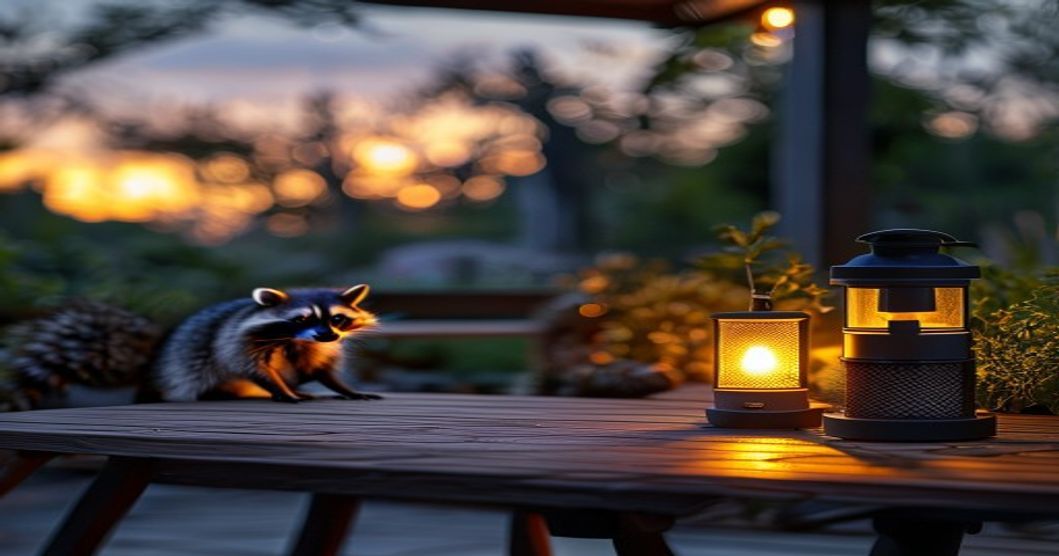
Clever raccoons learning placement. If the feeder is near a fence or table, a determined raccoon might approach from the side or back, bypassing the infrared zone. Place the feeder in the open, away from climbing spots. Some owners add a motion-activated sprinkler nearby—raccoons hate water.
Battery drain in winter. If your feeder is battery-powered, cold weather drains batteries faster. An outdoor feeder exposed to freezing temperatures might lose power mid-season. Consider a solar-powered or plug-in model if you’re in a cold climate.
Food spoilage in sealed compartments. Infrared feeders often have tightly sealed bowls to keep pests out. In humid or warm weather, sealed food can go moldy or rancid faster than in a vented bowl. Dump and refill daily, especially in summer.

Pairing Infrared Feeders with Other Strategies
An infrared feeder is one tool, not a complete solution. Smart pet owners combine it with other tactics:
- Motion lights. Raccoons are shy. Sudden bright light startles them. A solar motion light next to the feeder adds a psychological barrier.
- Elevation. Place the feeder on a sturdy table or stand at least three feet high. Raccoons can climb, but they prefer ground-level targets.
- Remove other food sources. Secure trash cans, pick up fallen fruit, and don’t leave pet food out overnight elsewhere. Raccoons are lazy—if one food source is hard, they’ll find an easier one.
- Feeding schedule. If possible, feed your cat during daytime hours and bring the feeder indoors at night. Raccoons are nocturnal, so you remove the temptation.
One owner swears by the combination of an infrared feeder during the day, bringing the feeder inside at sunset, and motion lights after dark. Within two weeks, the raccoons moved on to someone else’s yard.
Indoor vs. Outdoor Infrared Feeders
Indoor use is straightforward. An infrared feeder indoors doesn’t face weather, sensor buildup happens slowly, and battery life is longer. If you have a multi-cat household, indoor infrared or microchip feeders are ideal for separating diets—place one feeder for a cat on special food, another for the healthy one. Indoor models tend to be quieter and smaller.
Outdoor use demands durability. Look for an IP65 or IP67 weatherproof rating—that means the feeder resists dust and water submersion. Stainless steel or sealed plastic bodies hold up longer than aluminum. Check that the motor and battery compartment are fully sealed. Some owners place outdoor feeders under a small covered shelter or patio overhang to extend the feeder’s life.
If your cat spends part of the day indoors and part outside, an indoor feeder for nighttime (when raccoons hunt) and an outdoor infrared feeder for daytime works well. This also lets you control when and what your cat eats.
- Stops raccoons cold—heat detection is hard to trick
- Works indoors and outdoors
- No collar or microchip required (infrared-only models)
- Programmable portion sizes and feeding times
- Reduces food waste and pest attraction
- Durable models last 5+ years
- Expensive upfront ($150–600)
- Outdoor sensors need weekly cleaning
- Calibration required; setup takes time
- Battery drain in cold weather
- Can fail in extreme temps; seasonal recalibration needed
- False triggers possible in rare cases
Who This Feeder Type Is For (And Who It’s Not)
Perfect For
- Outdoor cat owners battling raccoons, possums, or feral cat raids
- Multi-cat households where cats eat different foods
- Owners tired of finding scattered kibble on the patio
- Anyone dealing with rodent or pest problems attracted by pet food
- Pet parents who want portion control and feeding logs
NOT a Good Fit For
- Indoor-only cats with no pest pressure—a regular bowl works fine
- Cat owners unwilling to clean sensors or troubleshoot calibration
- Owners with very tight budgets (these cost 2-4x a standard feeder)
- Cats that dislike confinement or waiting for mechanical triggers
- Households with very extreme climates (arctic cold or desert heat) without temperature controls
- Anyone expecting a “set and forget” solution—infrared feeders need seasonal attention
If you have a lazy indoor cat and no raccoon problems, save your money. A ceramic bowl and standard food storage container solve the problem without gadgets. But if you’re feeding cats outside and waking up to ransacked feeders, an infrared feeder pays for itself in peace of mind within a few weeks.
Key Specs to Check Before Buying
Weatherproof rating (IP code). IP65 means dust-tight and water-resistant to low-pressure jets. IP67 adds brief submersion protection. Anything below IP64 is risky outdoors.
Sensor range and sensitivity. Does the feeder detect your cat from 12 inches away or 3 inches? Adjustable sensitivity is a plus for seasonal or climate variation.
Power source. Battery-powered feeders need battery checks every few months. Solar or plug-in models are more reliable but less flexible in placement.
Bowl capacity. Outdoor feeders often have smaller bowls (0.5–1.5 cups) to limit spoilage. If your cat eats a lot, check how often you’ll need to refill.
Portion control. Can you set exact portion sizes per meal? Useful for weight management or multi-cat households with different needs.
Programmable meals. Do you want 1 meal a day, 2, 3, or custom times? More flexibility costs more but gives you feeding control.
Cleaning and maintenance access. Can you easily open and clean the bowl? If the design is sealed tight, you’ll spend minutes each refill, which gets old fast.
Real Owner Tips From the Trenches
One cat owner with a persistent raccoon problem shares: “I placed my infrared feeder on a small table in the middle of the yard, away from the fence. I added a solar light nearby. For the first week, the raccoon tried three times at different times of day. After the fourth failure, it stopped coming. The feeder just kept opening for my cat. Worth every penny.”
Another owner warns: “Mine was great for six months, then started failing. Turned out spider webs and dust had collected on the sensor lens. I couldn’t see it because it was mounted under a slight overhang. Now I clean it every Sunday, and it works perfectly again. Not a product failure—just maintenance I wasn’t doing.”
A multi-cat household owner notes: “The dual microchip version saved my life. My old cat is on prescription food, and my young cat eats regular kibble. Before, they shared the bowl and my old cat wasn’t getting her medicine food. The microchip feeder won’t open for the young cat, so each eats her own. Problem solved.”
And a practical tip from an experienced cat parent: “Don’t rely on the feeder alone. I still bring the bowl inside at night and use a motion light. The feeder stops raccoons, but removing temptation stops them from even trying. Combined, I’ve had zero raids in two years.”
Related Reading
For more on protecting your cat’s nutrition, check out our guide to best pet food storage containers to keep kibble fresh and safe. And if your cat has dietary sensitivities, our article on best automatic cat feeders with freeze-dry food compartments for picky eaters digs deeper into specialized feeding solutions. For health concerns related to diet changes, always consult our resource on pet allergy medication safety and recalls.
An infrared automatic feeder is a smart investment if you’re battling raccoon raids or managing diets in a multi-cat home. The technology is proven, the payoff is quick, and outdoor models last years with basic maintenance. Start with a heat-sensor-only model for simplicity, then upgrade to microchip hybrid if you need individual cat control. Pair it with motion lights, elevation, and good yard hygiene, and you’ll likely solve the raccoon problem permanently. The key: commit to weekly sensor cleaning on outdoor units, and you’ll enjoy raccoon-free mornings for years.
Disclosure: This article contains affiliate links to products. We may earn a commission when you click and make a purchase through these links at no extra cost to you. As an Amazon Associate I earn from qualifying purchases. This does not influence our product recommendations, which are based on research and real-world owner feedback. We only recommend products we believe are genuinely useful for the pet care needs we discuss.